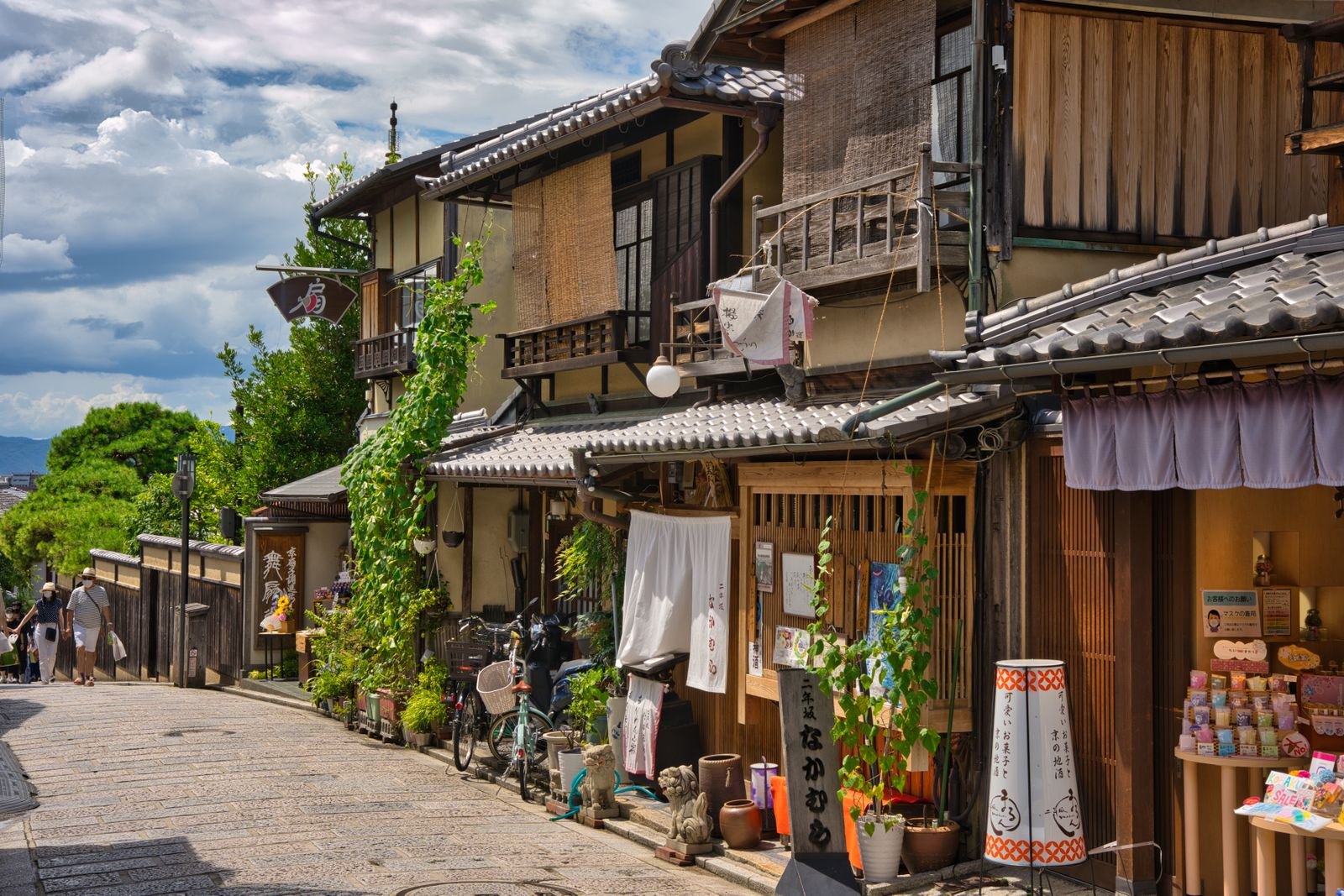
Kyoto's famous places are not arranged in one compact sightseeing district. A three-day plan becomes easier when you group them geographically and accept that not every celebrated temple belongs on the same visit. Repeated cross-city transfers can consume the time you hoped to spend in gardens and streets.
Choose a small number of areas before choosing every individual stop. Eastern Kyoto, Arashiyama in the west and a separate southern outing provide one possible structure, but your interests may justify a different balance.
Spend a day in one part of eastern Kyoto
The Higashiyama area can include a substantial temple visit and time in surrounding streets. Look at slopes and the actual walking route before combining places. A location that appears close on the map may involve a climb or a crowded approach.
Gion and nearby areas deserve particular care around private property and photography rules. Follow posted signs, avoid obstructing residents and do not assume that a picturesque lane is open to unrestricted access. The city is not a stage set for visitors.
Keep Arashiyama as its own outing
Travel to the western side with a clear idea of the places you want to see. Choose a few rather than trying to include every nearby temple and viewpoint. Leave enough time for the return journey, especially if dinner is booked elsewhere.
Do not attach a distant northern landmark simply because it looks like it belongs on the same side of a small map. Check the actual connection and decide whether the extra transfer improves the day.
Make a shortlist that can shrink
Within each area, identify one priority and two optional stops. If the first visit takes longer, the optional stops can disappear without damaging the day. This is particularly helpful when a temple or garden rewards more time than expected. The goal is not to hurry out simply because the next map pin is waiting.
Use a meal break to decide whether to continue. Check how far the next place is, whether it remains open long enough for a worthwhile visit and how you will return afterward. A nominally short bus ride can still involve walking to the stop and waiting; do not compare only the time inside the vehicle.
For a group with different walking comfort, choose the shared route around the least demanding workable option, then let those who want an extra climb take it separately if that suits everyone. Agree on a reunion before splitting. This is more comfortable than discovering halfway up a slope that the route does not work for part of the group.
Make the third day selective
A southern visit, a museum-focused day around another area or a return to a neighborhood you enjoyed can all work. Fushimi is a different outing from central Kyoto; plan its travel and walking demands rather than treating it as a quick final stop.
Check official transport and visitor information shortly before the trip. Avoid relying on an old itinerary's exact bus, fare or opening time. Keep luggage out of crowded sightseeing journeys where possible by using arrangements appropriate to your accommodation and travel plans.
Three days cannot contain all of Kyoto. A smaller route lets you notice the differences between places instead of remembering only the journey from one entrance to the next.