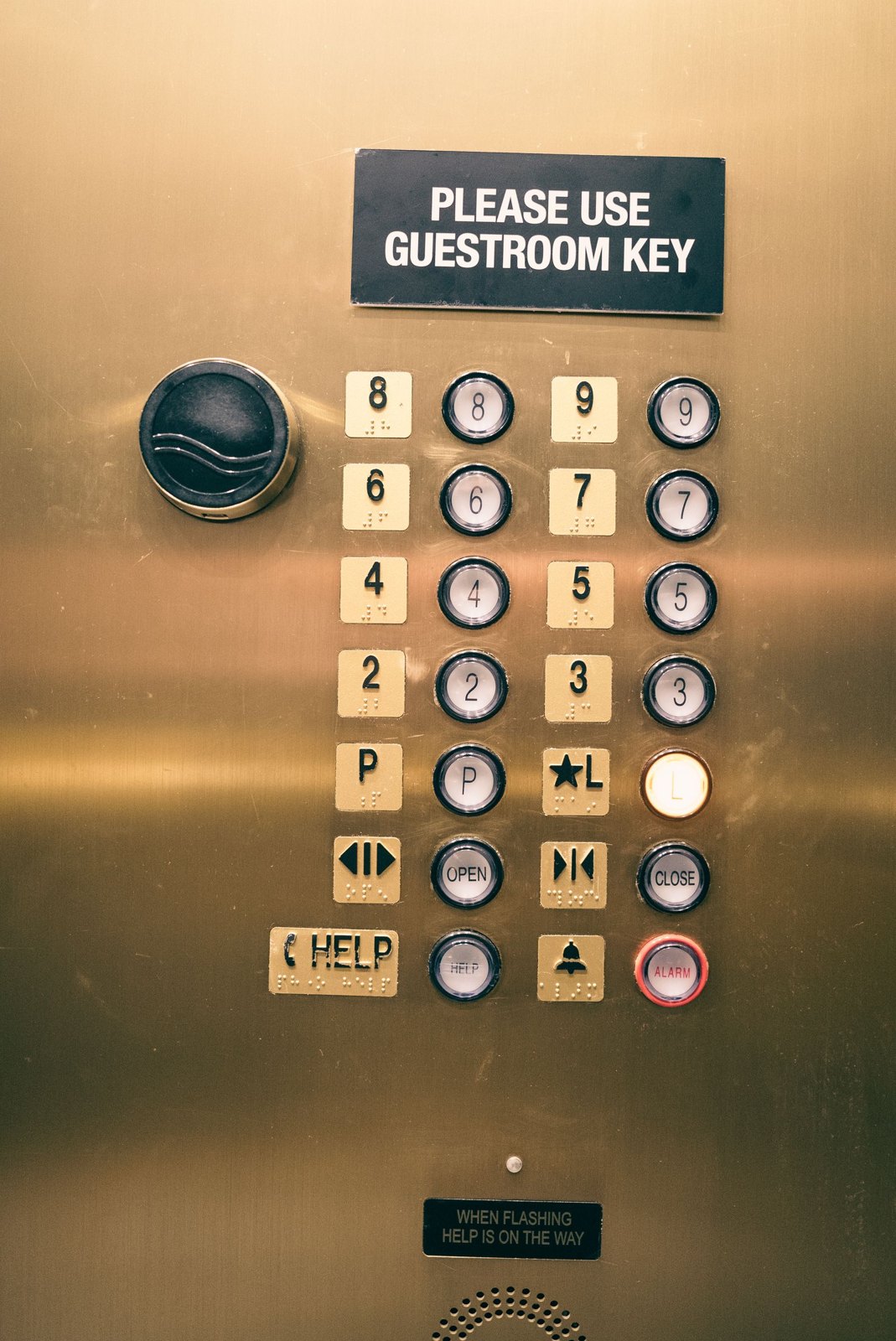
The elevator symbol in a listing answers a narrow question: there is an elevator somewhere in the building. It may not answer whether you can reach it without steps, whether it stops on your floor or whether the room entrance is beyond another staircase. Older buildings make these distinctions especially important.
Describe the route you need before asking about facilities. Start at the street, continue through the entrance and reception, then follow the path to the room and bathroom. If you use a mobility aid, provide the dimensions needed for access and ask for actual door and cabin measurements. A general reassurance that luggage fits is not enough.
Look for breaks in the route
Ask whether there are steps before the elevator or between its landing and the room. Some buildings have elevators that stop between floors. An annex may have a different entrance or no elevator at all, even when the main hotel has one. Confirm the exact room category and building rather than relying on property-wide icons.
Photographs can help when they show the entrance, threshold and elevator doorway clearly. They do not replace dimensions or confirmation of equipment operation. If access is essential, ask what happens if the elevator is unavailable and whether another suitable room exists. Do not accept being carried as a substitute for an access arrangement that works for you.
For example, a reply saying that the elevator serves the third floor still leaves several questions open: is the street entrance level, is there a step into the lobby, and does the elevator stop directly at the third-floor corridor? Ask these as separate questions if they affect your access. A clear sequence is easier for the property to verify than a broad request for an accessible room.
Bedroom access and bathroom usability also need separate consideration. An accessible doorway does not establish that the shower arrangement, turning space or other bathroom features meet your needs. Explain the features you require without feeling obliged to provide an unnecessary medical history. The property should confirm physical details; you can then decide whether those details work for you.
Keep the confirmation attached to the booking
Use written communication through the property or booking platform. Summarize the features you need and ask which are confirmed. Save the reply offline with the reservation. If a room change is proposed later, check that the replacement preserves the access you agreed on.
The surrounding route deserves the same attention. A step-free hotel is less convenient if the nearest station exit has stairs or the pavement is difficult. Consult the transport operator's accessibility information and identify an alternative arrival route where needed.
You do not need to ask every property every possible question. Focus on the barriers that affect you. Precise information lets you decide for yourself, while broad terms such as accessible or elevator available can conceal very different arrangements.